L'Edifice - Reproduction
 edge
edgeEncouraged by fellow L'Edifice enthusiasts, it's time (May 2025) to re-created some wooden parts. Basically half of the 'A - Tenons de soubassement' are missing and/or broken, same issue with the 'J- Faîtières'... Also want those M4/M5 stairs and still missing some panels...
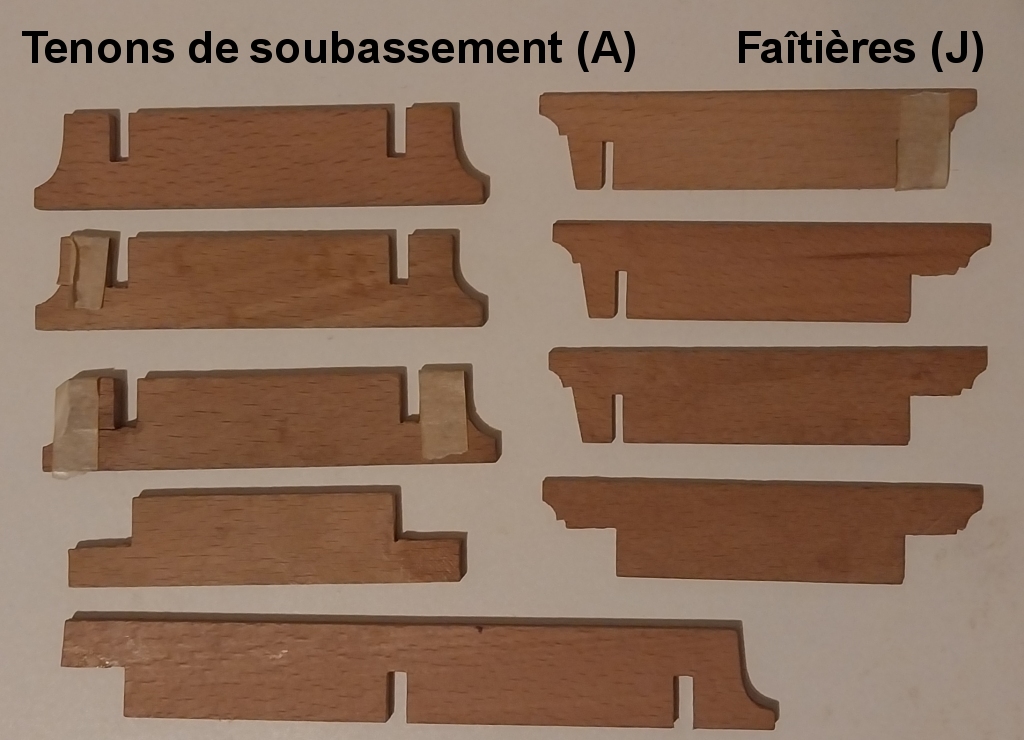
It's time for replacement parts!
The system
The basic building system consists of horizontal trusses (A - Tenons de soubassements) and vertical pillars & columns (B - Piliers et Colonnes). Floor tiles (C) could be added in between the pillars, on top of the trusses. The pillars are having grooves, so nicely decorated panels (D) could be inserted. In this way a structure could be build.
The trusses are used for both ground level and (placed upside-down) for all floor levels above. At ground level the longer pillars (B1's) sticking straight into the trusses. Then a layer of trusses could be build. For all the layers above, shorter pillars (B2's) are used.
So the ground level uses floor tiles (C) and then wall panels, at floor levels 'gutters' (E) are used instead, creating a very nice appearance.
Dimensions
Building the same construction from different boxes, it appears that some wooden parts fits better then others and even the pitches between columns varies a bit, using the original pieces.

Right: Set 2 (±1922) panels & Set-3 (1927): wood.
Both examples are coming from the same 'Gothic Flamboyant Castles' period (1922-1930), with similar front picture. It seems to me, that the earlier boxes having a tighter fit.
Nominal distances...
The nominal pitch distance between columns: 59.0 to 59.5 mm.
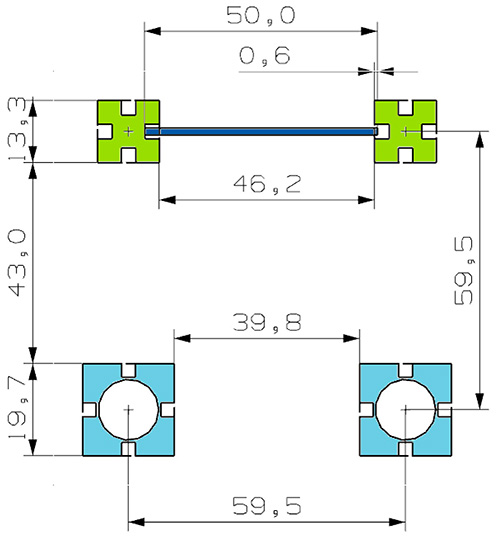
Because columns are wider then pillars, also different C & K panels exists.
Steamed beech wood
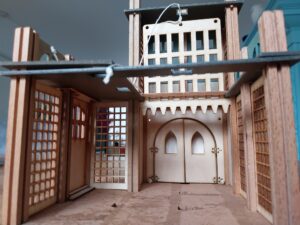
L'Edifice is build from steamed beech. In picture on top of page, on the left building, I did use the new none-steamed Tenons (A).
There is an obvious contrast shown, between the Tenons (A) & Pillars (B).
The right building is created from a younger Set-3 (1927) and here also lighter wood is used, but still darker then the new Tenons.
It's possible to 'darken' the wood a bit, using 'black tea'. But thinking about it, the wood produced around 1920 would have been lighter too.
A. Tenons de soubassement
Let's start with the horizontal trusses. Half the trusses having one or more broken notches. This is a common issue, looking to various online pictures.
Production
How did Mericant created these parts?
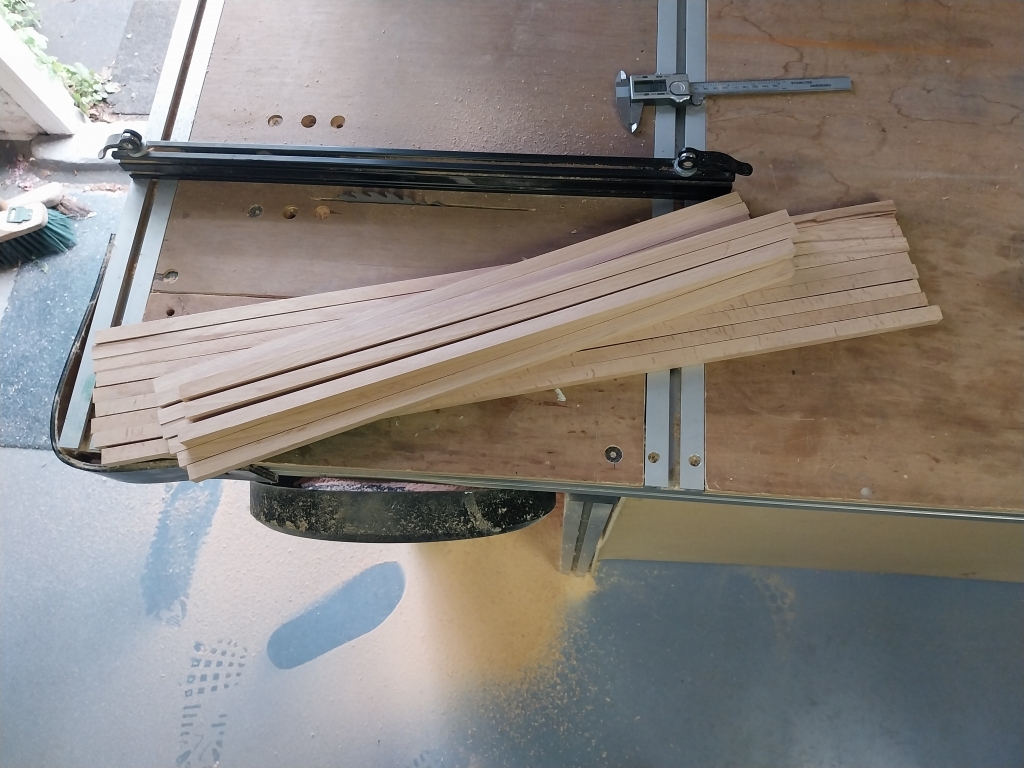
My guess: They would be using a big circular saw and some profile cutters, starting with a beam of steamed beach wood. So let's try that.
- Start trimming the beam to the right height.
- Saw repetivialy parallel grooves over full length.
- Cut the beam in smaller blocks for certain lengths.
- Cut the contours at both ends.
This will make the difference between a A2 & A2-bis. - Finally slice the wooden blocks in thin parts.
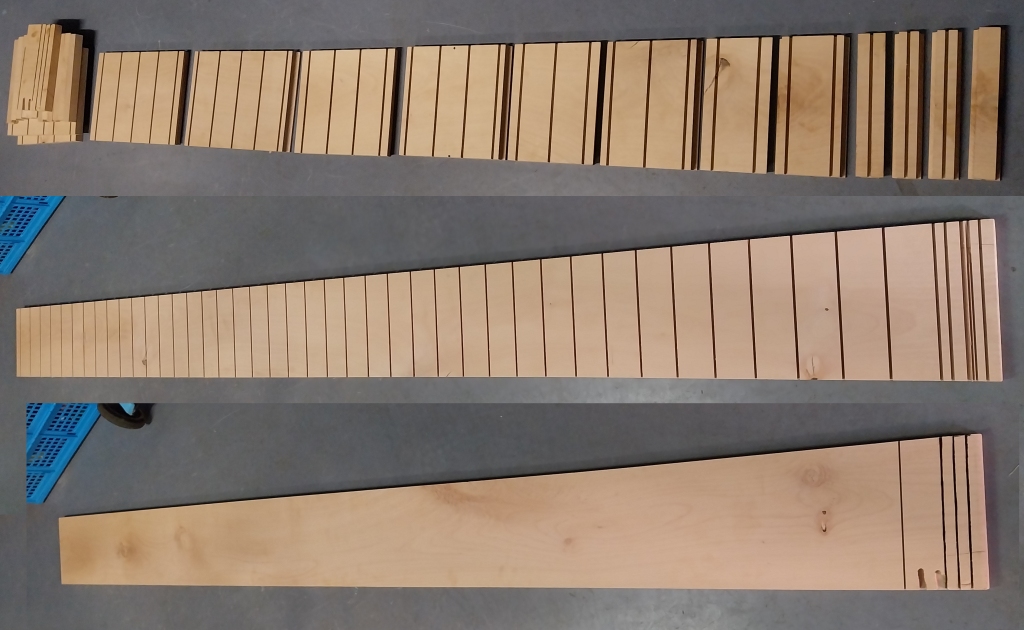
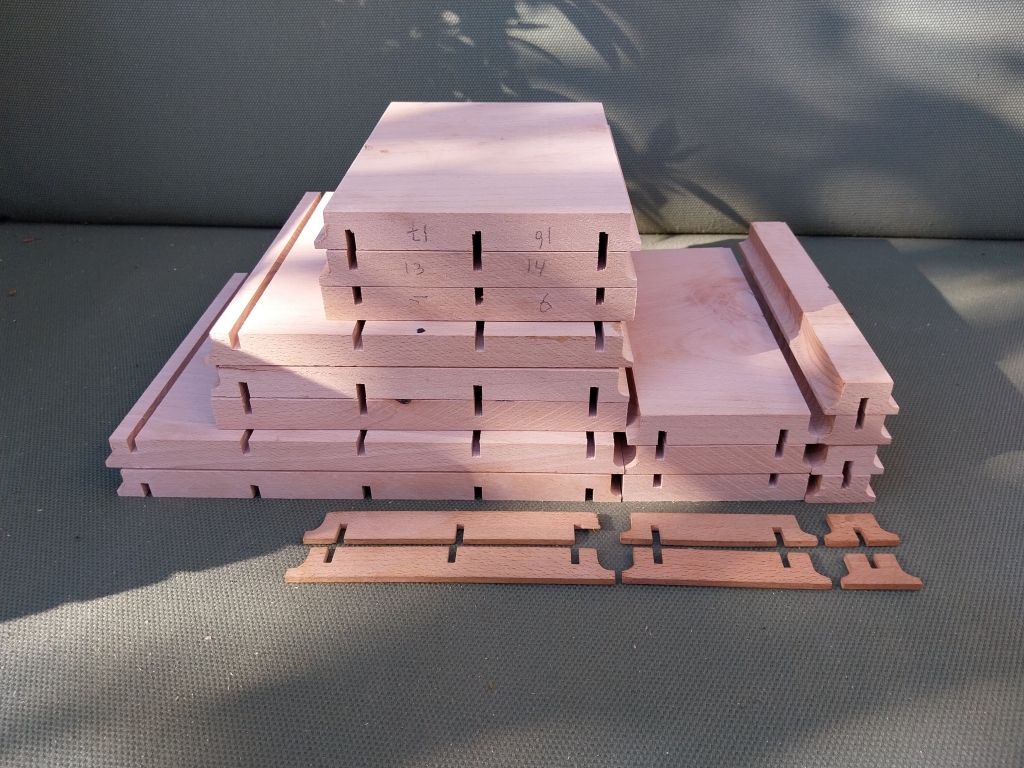
Finally ended up with about 210 parts. From those, about ~15 parts were trash.
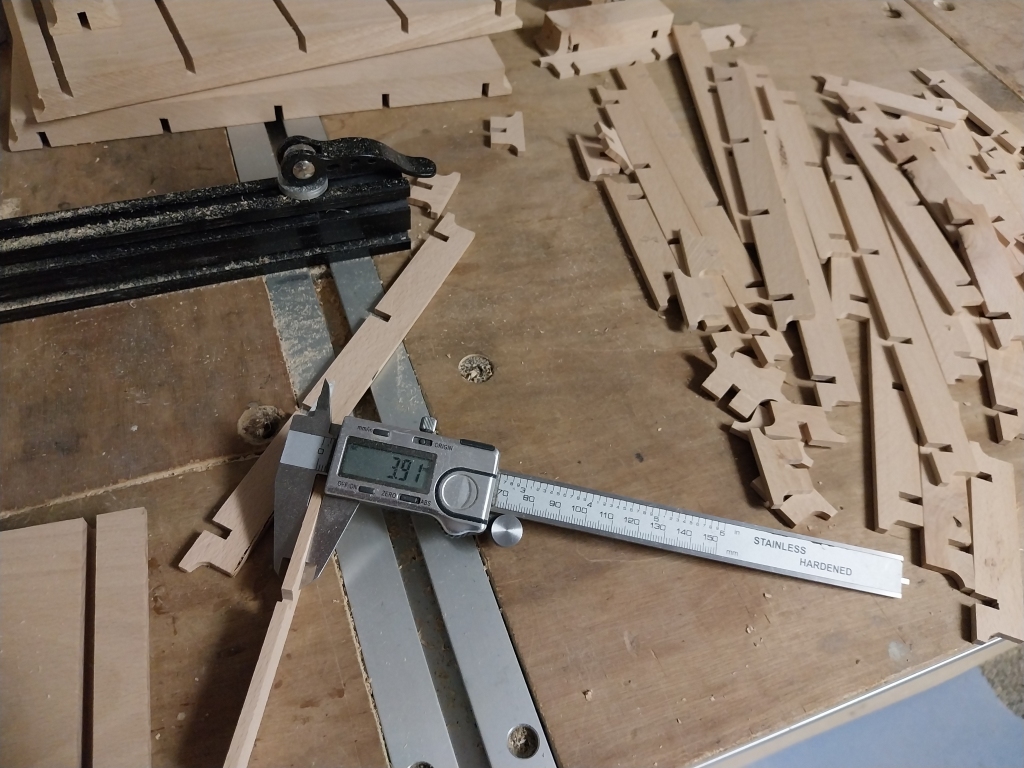
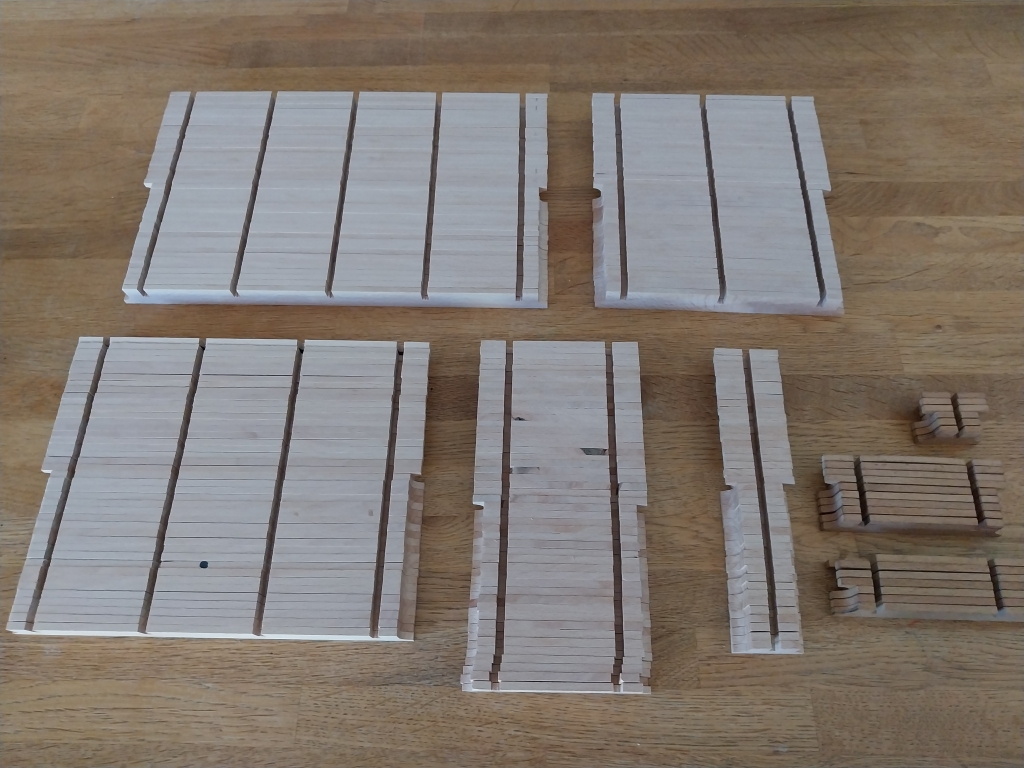
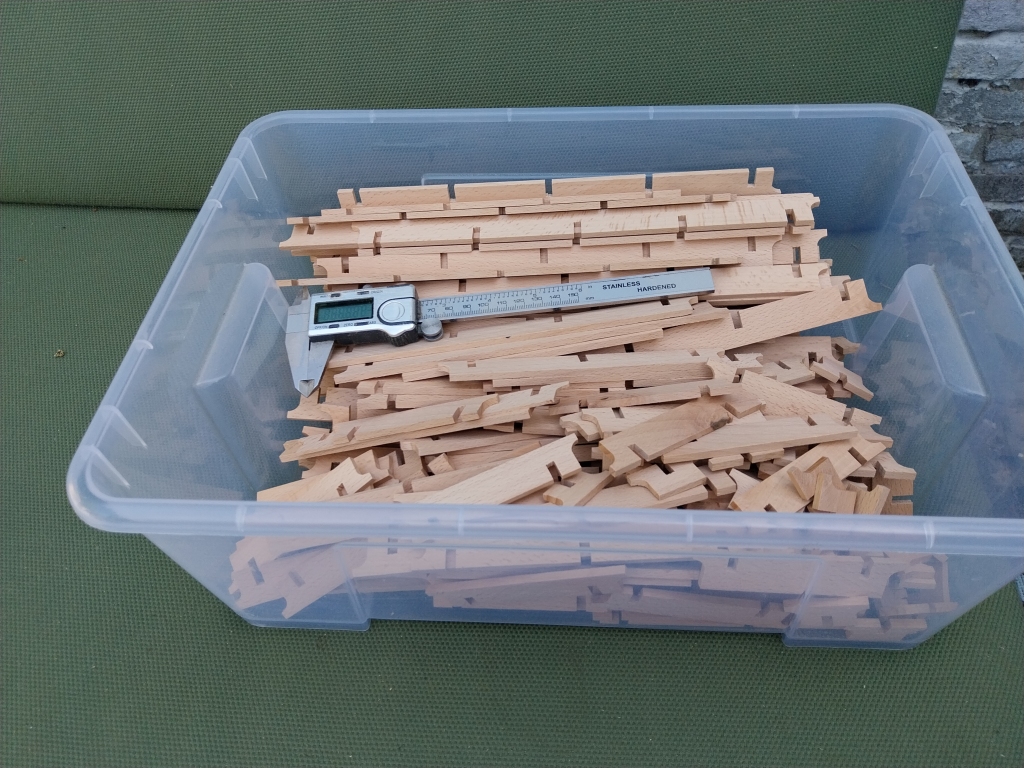
Comparison to other boxes:
| Truss: | DIY | No. 1 | No. 4 | No. 6 |
| A1 + A1 bis | 21 + 20 | 4 + 3 | 10 + 10 | 24 +14 |
| A2 + A2 bis | 22 + 24 | 5 + 5 | 10 + 12 | 20 + 16 |
| A3 + A3 bis | 21 + 20 | 4 + 4 | 14 + 13 | 15 + 14 |
| A4 + A4 bis | 21 + 20 | - | 6 + 11 | 25 + 19 |
| A5 + A5 bis | 20 + 20 | - | 6 + 3 | 12 + 14 |
| A6 + A6 bis | - | - | 2 + 1 | 12 + 12 |
| A7 + A7 bis | - | - | - | 6 + 7 |
| A8 + A8 bis | - | - | - | 4 + 6 |
| A9 + A9 bis | - | - | - | 1 + 2 |
| A11-bis | - | - | - | 5 |
| A12 + A12 bis | - | - | - | 1 + 4 |
| Half bay trusses: | ||||
| A15 + A15 ter | - | - | - | 12 + 9 |
| A16 + A16 bis | - | - | - | 8 + 6 |
| A17 + A17 bis | - | - | - | 16 + 6 |
| A18 | - | - | - | 9 |
| A19 + A19 bis | - | - | - | 8 + 4 |
| A20 bis | - | - | - | 2 |
| Sum: | 209 | 25 | 98 | 194 |
So this amount of wooden parts is getting close to Set No. 6.
B. Piliers et Colonnes
Since my Set No. 4 consists mostly out of cardboard parts, it might even be fun creating all missing wooden parts.
Let's start with the pillars: B1, B2, B3 & B11.
Production
- Saw square strokes out of beech.
- Cut the 3mm grooves on all 4 sides.
- Cut beams in right lengths.
- Cut the 4mm grooves on top & bottom.
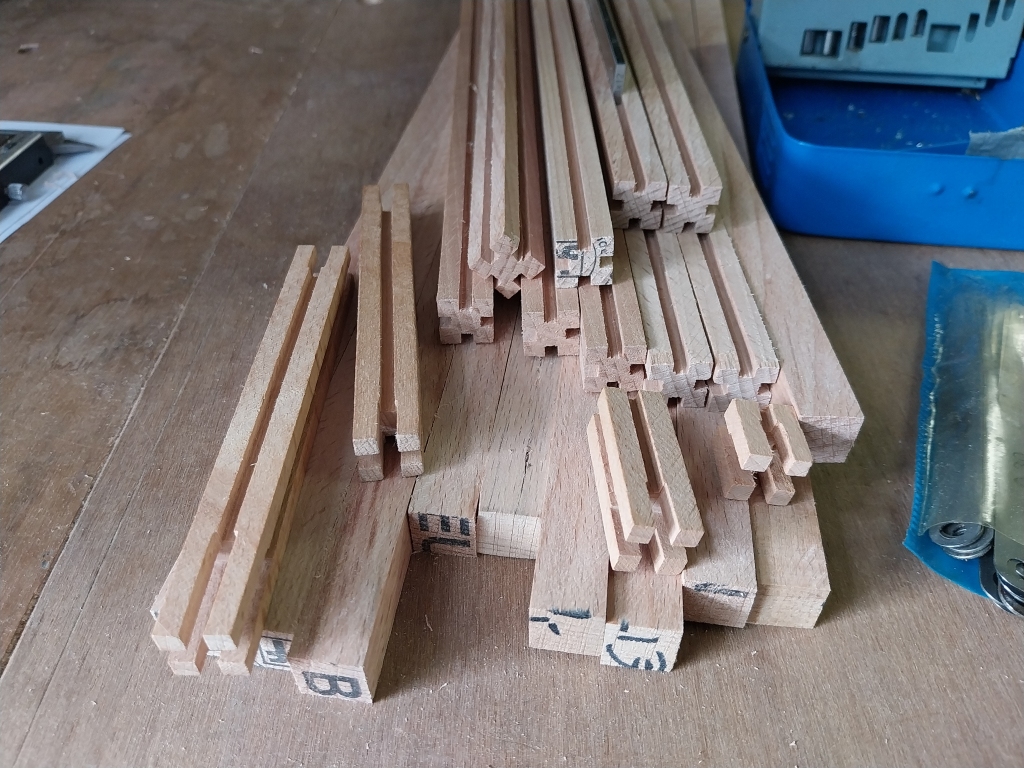
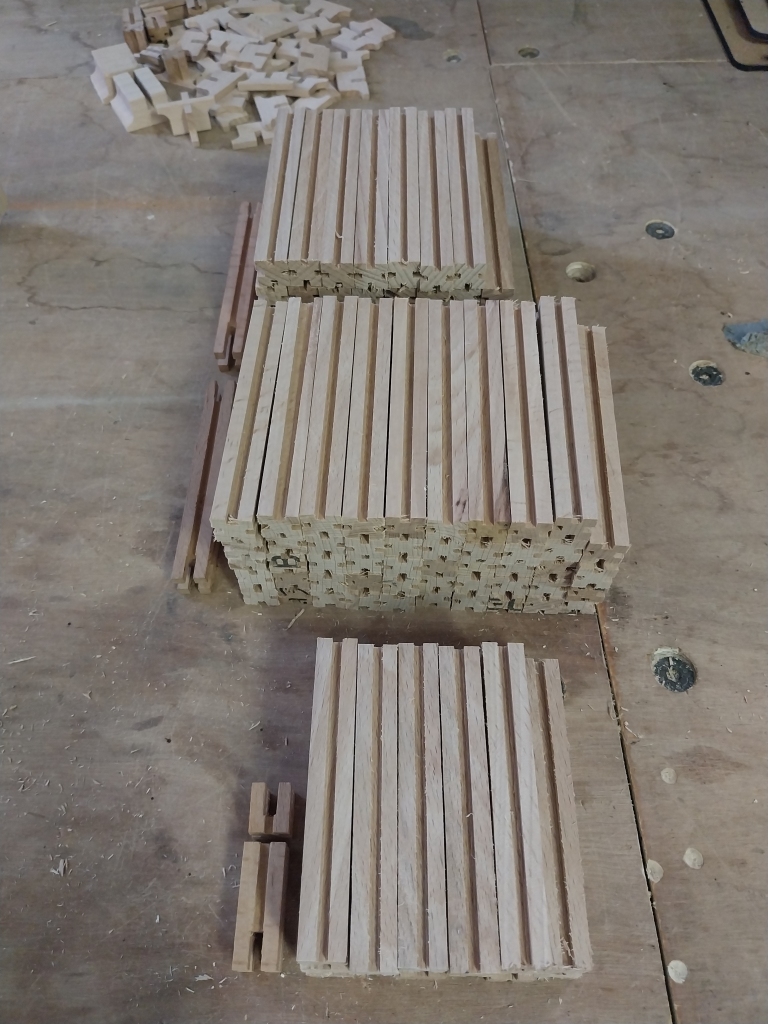
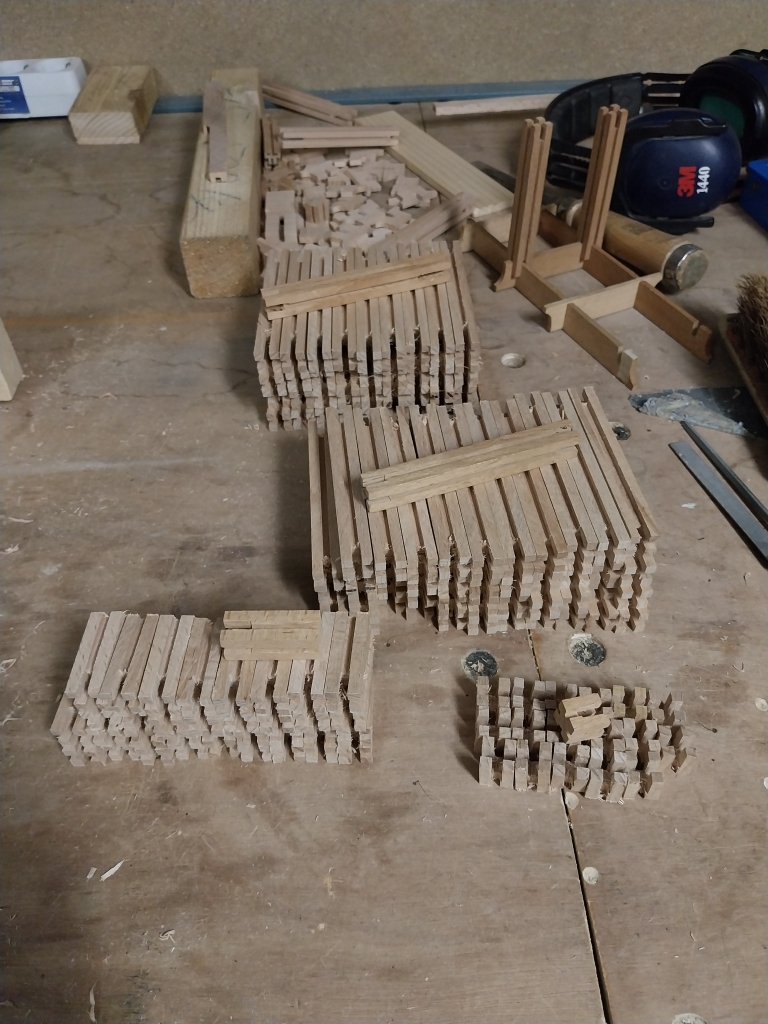
That was a bit time consuming. But at least enough columns for set 4.
| Column: | DIY | No. 1 | No. 4 | No. 6 |
| B1 | 36 | 6 | 26 | 34 |
| B2 | 43 | 4 | 34 | 78 |
| B3 | 34 | 9 | 32 | 58 |
| B4 | - | 2 | 7 | 16 |
| B5 | - | 2 | 7 | 13 |
| B5bis | - | - | - | 16 |
| B6 | - | - | - | 1 |
| B7 | - | - | - | 7 |
| B8 | - | - | - | 56 |
| B9 | - | - | - | 50 |
| B10 | - | - | - | 24 |
| B11 | 17 | 6 | 13 | 26 |
| B13bis | - | - | - | 5 |
| Sum: | 130 | 29 | 119 | 384 |
J. Faîtières
These Faîtières could be created similar like the Tenons de soubassement (A):
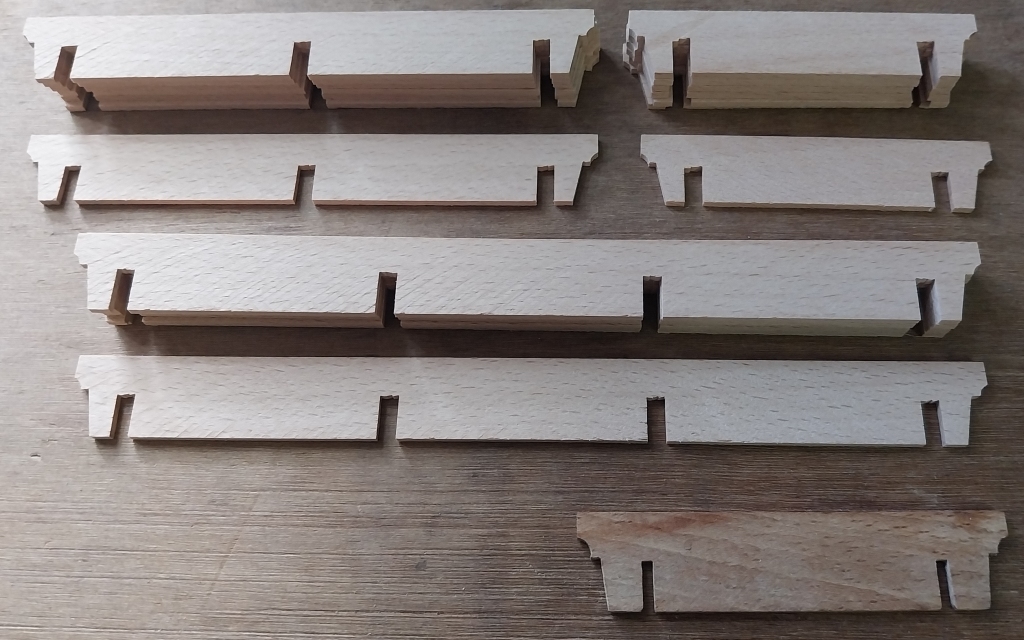
I knew already, the grooves of the tenons are wider then needed for these Faîtières, but just wanted the experience of cutting these thinner parts.
Time to test & build
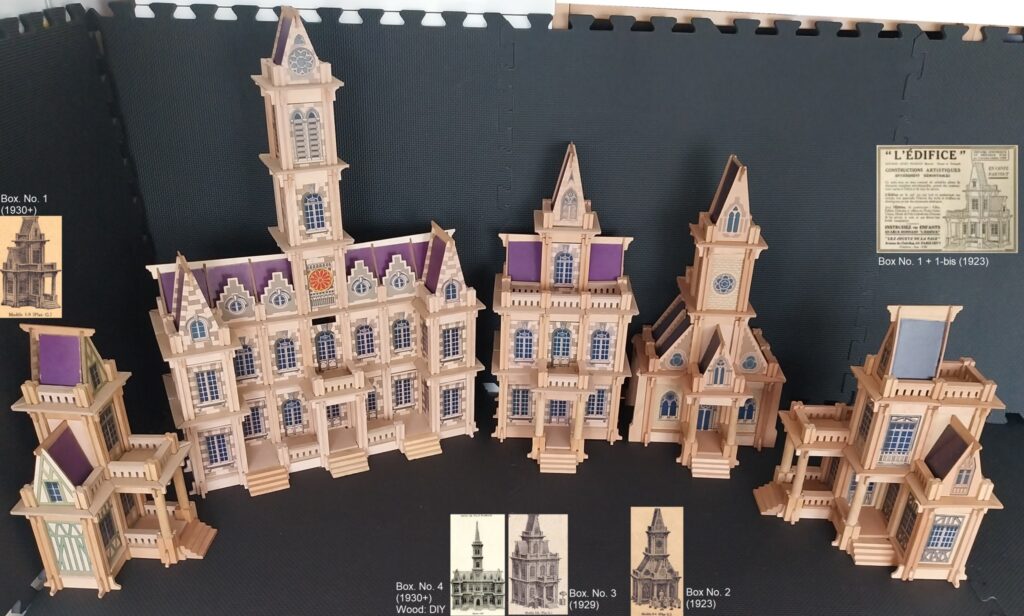
Building with different boxes from different periods.
From right to left:
- Set 1923: Box 1 + 1bis combined.
Model:
1921 advertisement, example for box 2.
Manual 1922 - Model box No. 2.
Manual 1926 - Model 2-13, box 2. - Set 1923: Box 2:
Model:
Manual 1923 - Model box No. 2
Manual 1926 - Model 3-4. - Set 1929: Box 3.
Model:
Manual 1926 - Model 3-6. - Set 1930+: Box 4.
Model:
Contest Lepin 1920, all wooden panels.
Manual 1922 - Hotel De Ville Flamand (No. 56)
Manual 1926 - example for box 4.
Manual 1928 - Model 4-13
→ This model contains all DIY wood, as described above. - Set 1930+: Box 1.
Model: Normandic house
Manual 1922 - Model box No. 1.
Manual 1926 - Model 1-9.
For set 4, the truss A6/A6-bis is missing, which explains the hole in the middle of the building, on the 1st floor. In this case 2x A4's is used.
This also explains the need for so many different sized 'tenons'...
It's also clear, that the fresh new wood is lighter than other wood used. Maybe it did look like this, when Mericant was producing these parts in the past?!
M. Escaliers
Always liked those M4, M5 & M6 staircases, for making a great entrance. Since it's impossible to find original parts, let's give it try and build my own.
With only a circlesaw and a M1 staircase for reference, let's do this.
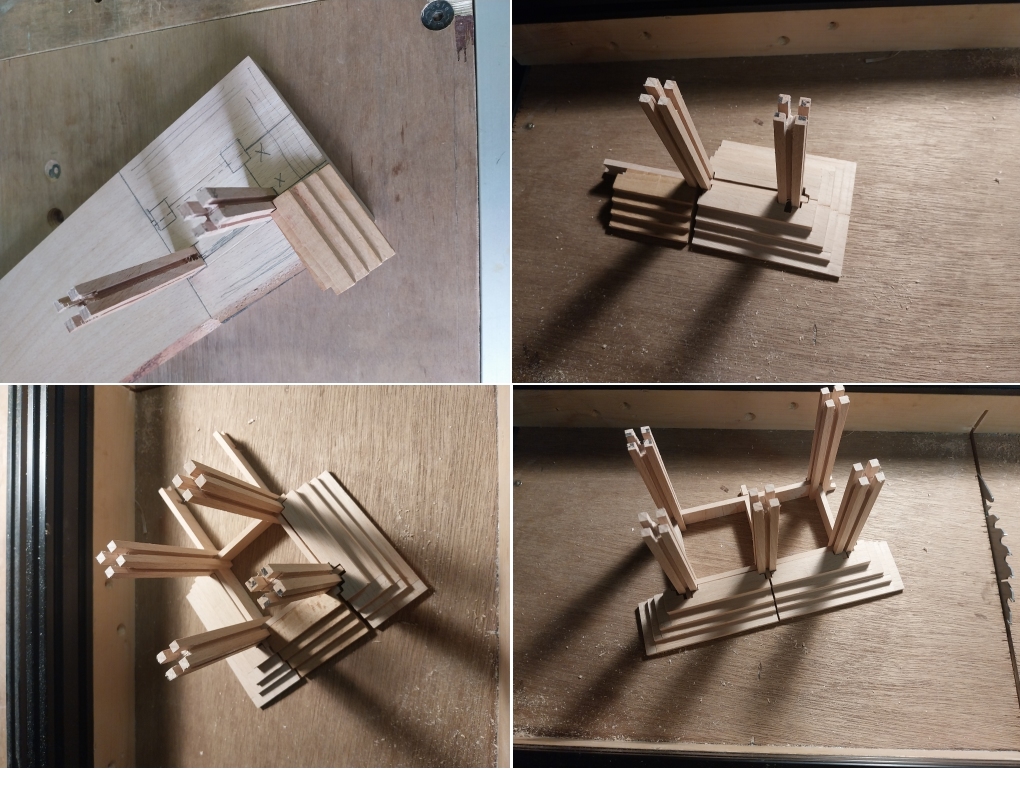
Starting with a small drawing on top, needed 2 hours to cut those M4 & M5 staircases. Now I do understand, why these are one of the most expensive pieces on the price list, around 1925: 2.7 French franc per piece. Even more costly then 12x pillars B1.
D. Panneaux
Then I'm also looking for many more (fortress) panels...
So how could these be created/printed best?
Any thoughts how to do? Let me know!
Accessories: Tower
I like these additional L'Edifice towers a lot. The most interesting part is of course the crenelated base (D22). The original tower is having 5 layouts:


With different roof tops, it's possible to vary the towers. So let's try to make Type-1.
During an earlier attempt (July 2025), trying to bend cardboard with custom made bending tool. It seems to be hard, creating a nice round tower.
The 3mm cardboard was basically too thick and became very wobbly. The long piece was way too heavy to bend at all.
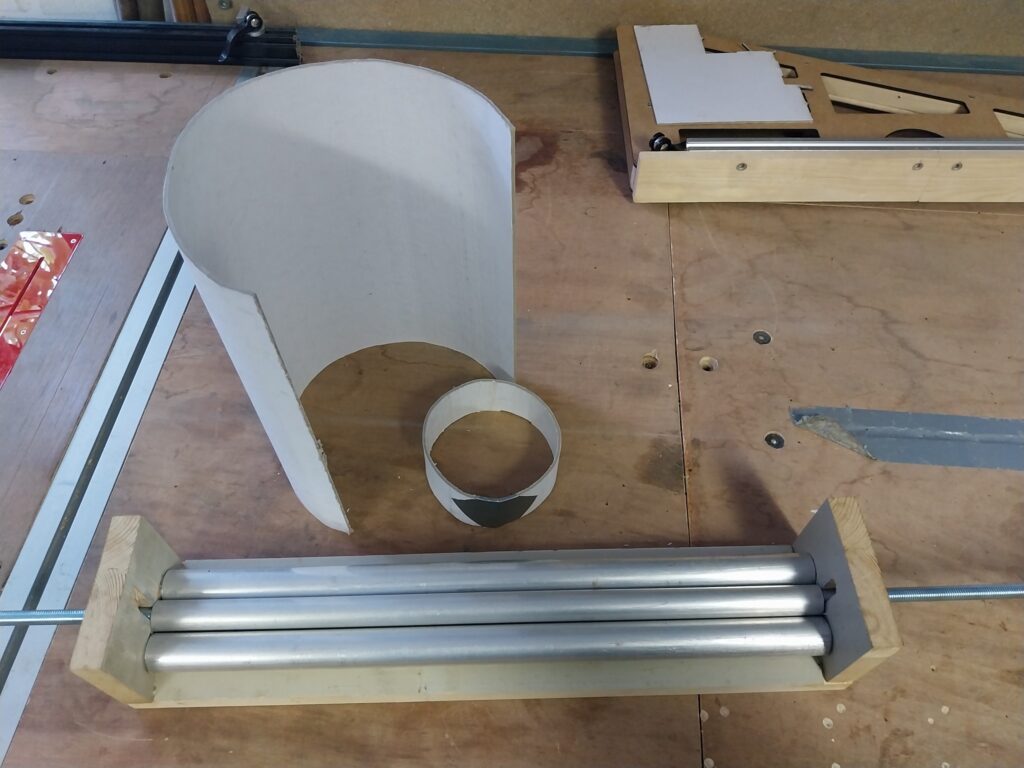
After 3D modelling the Louvre, with those many towers, it was again time (May 2026) to build that tower again. I just wanted the look & feel of such a tower, how big is it? This time prepping cutouts for the laser (using plasterer's runner) and glue that on small plywood circles. It was relative quick & cheap:


Those towers are quite huge! I did not expect that. Integrated a small L'Edifice house. The dimensions are (almost) right. Next step is adding some textures...
Caspar created those tower textures, based on the original version. In SketchFab they do look great, but printed versions are great too. For this attempt I did create a 2nd tower and glued the printed textures on top, results:


Great to see the textured version in real. It looks almost like the original (I guess).
Also experimented with combining these towers with Mobaco, this seems a great match too!
Model TR-22 Chateau Feodal
Finally I was able to build some more towers and experimented with different roof styles:
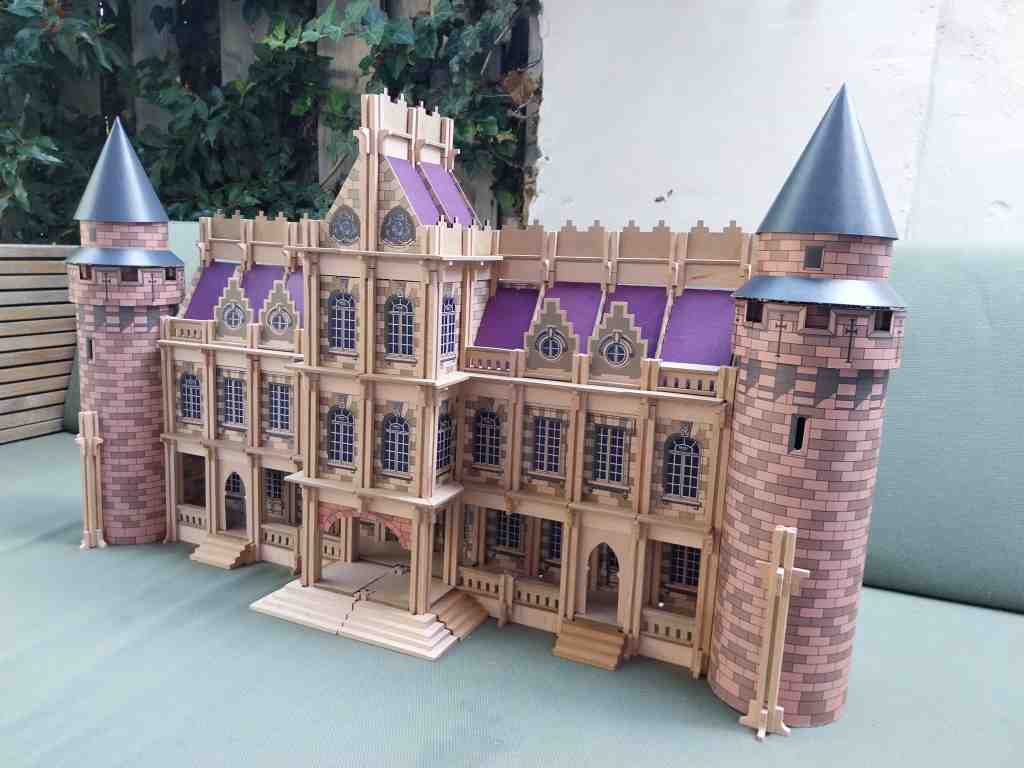
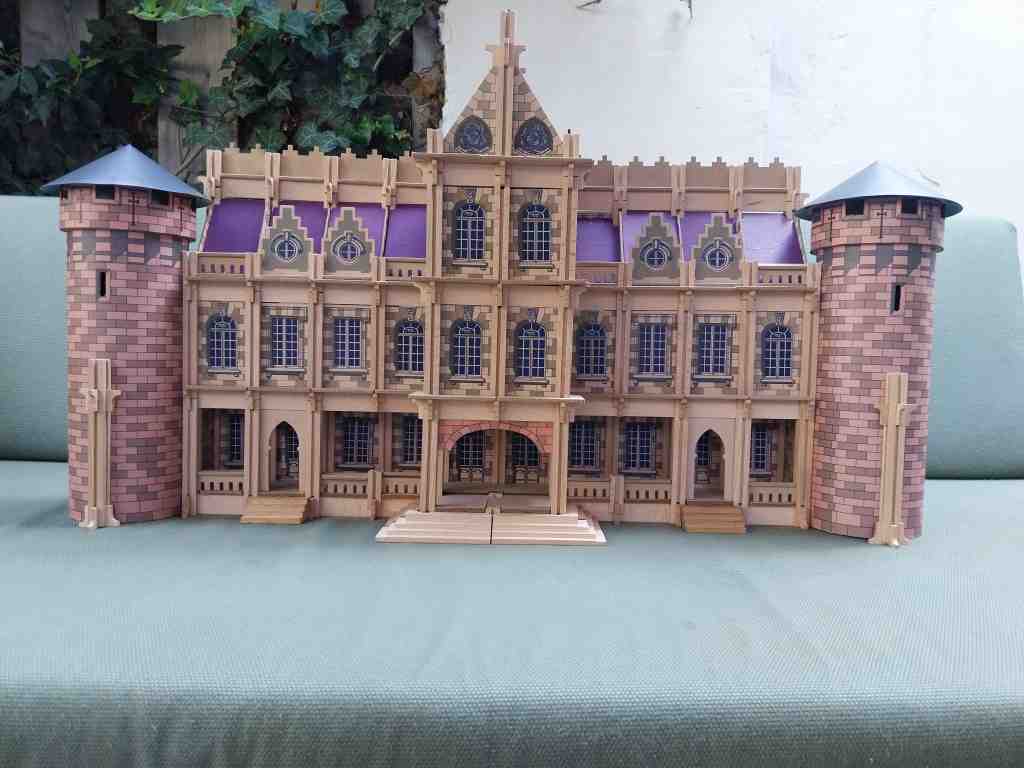
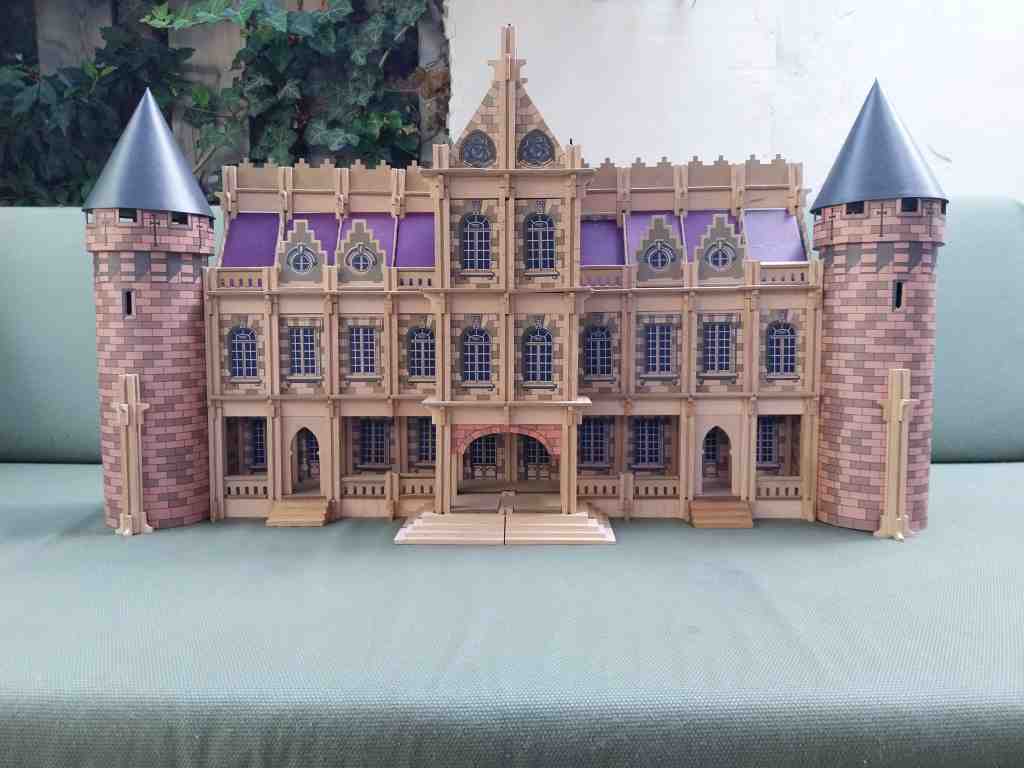
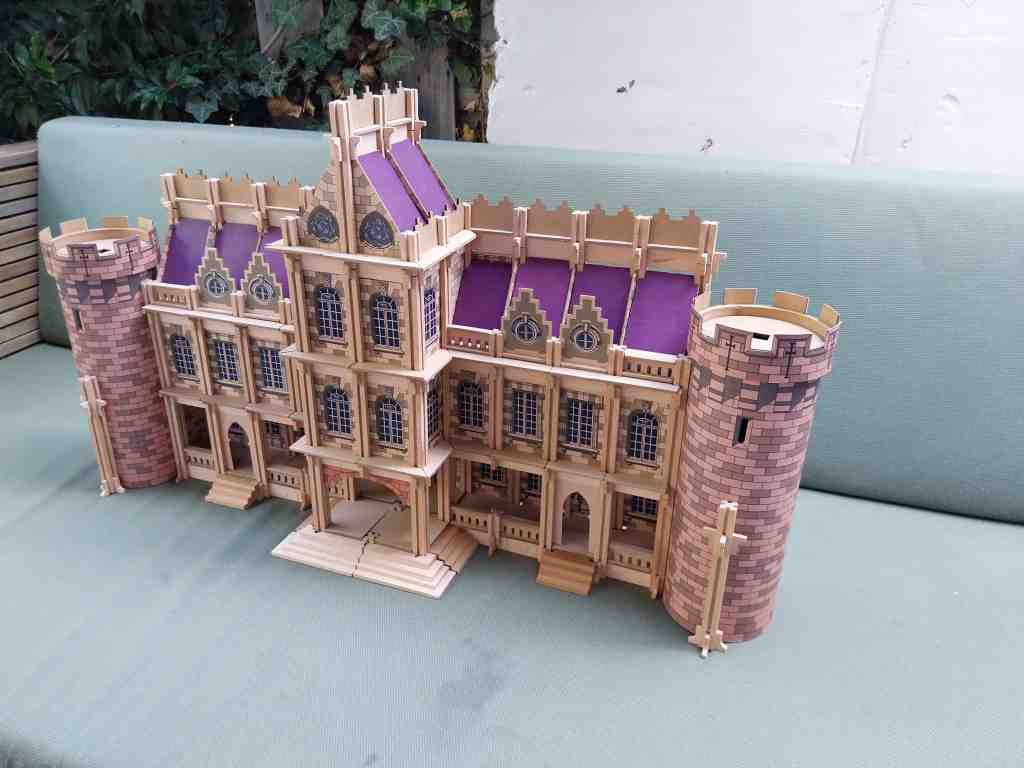
This is little smaller version of TR-22 Chateau Feodal.
Wrapping up...
This was a fun project, working with beech, upgraded some tooling in the garage. And on top of that, finally possible to build with set No. 4 too.
Those towers are great too, nice to add these parts to the collection.
Click here, for a short introduction about L'Edifice.